
There’s a point in the day when your makeup is still mostly there, but the little things have started happening. Your nose is shiny. Your lipstick has survived only around the edges. The concealer you carefully blended this morning has found a line to settle into.
You probably don’t need another full face. Start by looking at what has actually changed, then fix one area at a time. A tissue, clean fingertips, your lip color, and a small amount of powder can cover a surprising amount of ground.
First, stop adding product
Check your face in ordinary daylight if you can. A harsh bathroom mirror can turn a perfectly wearable base into a project. Look at your makeup from the distance someone would stand while talking to you.
Decide what bothers you: oil, a visible crease, a missing patch of coverage, or faded color. Each needs a slightly different fix. Applying foundation over all four usually means putting more product where you already have enough.
Blot shine before reaching for powder
Press a clean tissue or blotting paper gently against shiny areas. Lift it away instead of dragging it across your base. Check the sides of your nose, the center of your forehead, and your chin, then leave the areas you like alone.
If you still want less shine, press a little powder onto those spots with a small brush or clean puff. Start lightly. You can add another touch; taking a heavy layer back off is less convenient when you’re already running late.
Smooth a crease before covering it
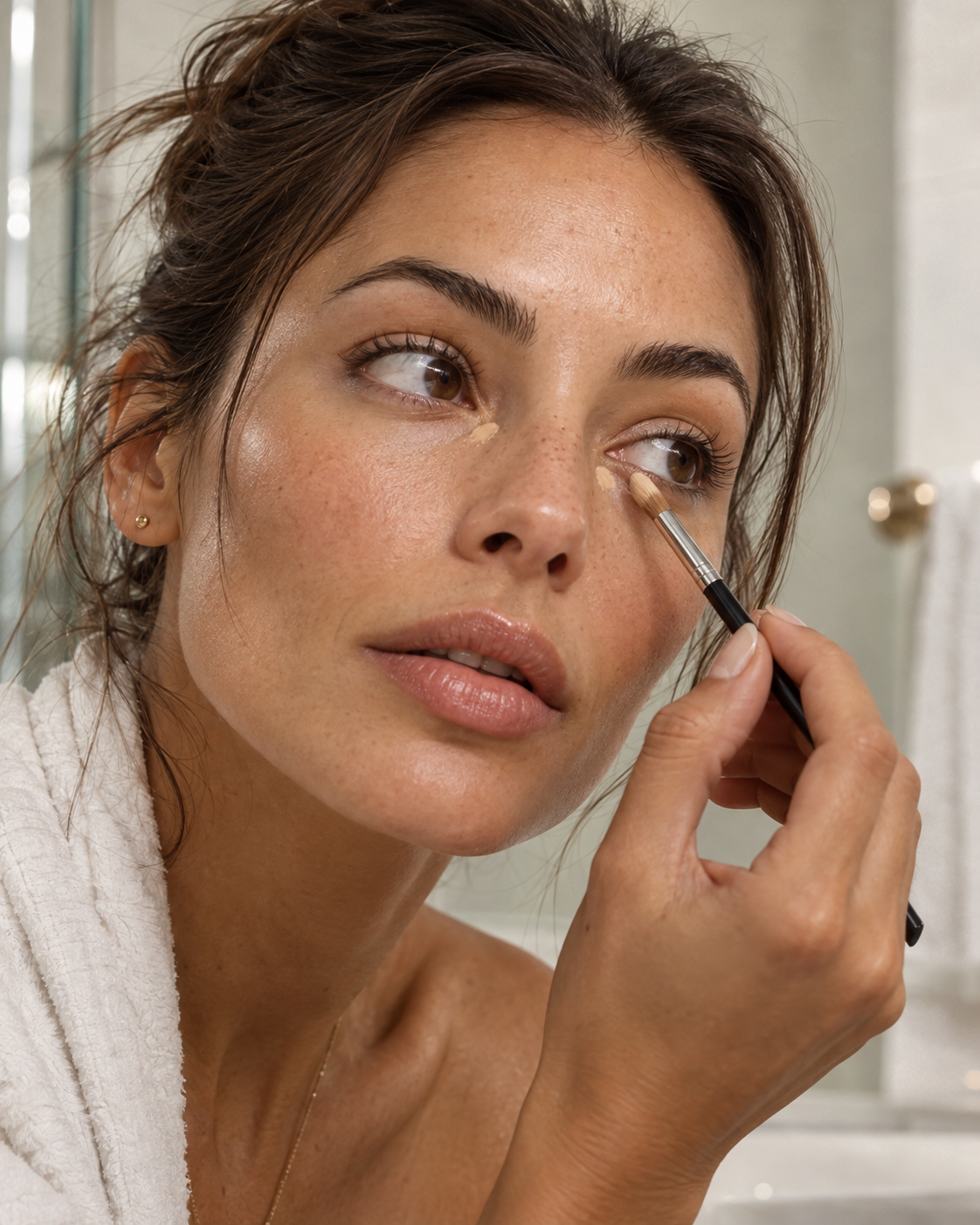
If concealer has settled under your eyes, use a clean fingertip to gently tap the product that is already there. You may find that redistributing it is enough. If you still want coverage, add a tiny amount only where you can see the darkness you want to soften.
Around your mouth or nose, gently blend the edge of any gathered foundation before adding anything. If the surface is flaky, more powder can make the texture more visible. Keep the correction small rather than repeatedly rubbing the whole area.
Replace the missing patch, not the whole base
For an isolated area where foundation has worn away, tap on a small amount of your usual concealer or foundation and blend its edges into the makeup around it. Use a clean tool or clean fingertips. Start with less than your morning application.
If this happens every day in the same place, revisit your original application. Our guide to makeup placement walks through where you may need coverage and where a lighter layer can work.
Bring back color after you fix the base
Once the coverage looks the way you want, check your blush. It is easy to assume you need more foundation when what has faded is the color in your cheeks.
Use a small amount of blush and blend gently so you do not disturb the base underneath. With a cream formula, tap rather than scrub. With powder, use a light hand and check both cheeks before going back for more.
Give lipstick a clean restart
If your lip color has worn off unevenly, gently remove loose residue with a tissue before reapplying. Check the corners and the inner edge of your lips. A thin fresh layer usually looks more deliberate than several coats over a leftover outline.
If your lips feel dry, use a little of your usual lip balm, let it settle, and blot excess before putting the color back on. Keep the product you are actually wearing in your bag; your emergency lipstick does not have to be a separate purchase.
The two-minute version
Blot the center of your face. Tap out any visible creases. Add coverage to one or two places if needed, refresh your lips, then stop. If you have another minute, check your blush.
For an evening that starts straight after your day, read how to make holiday party makeup last. A little planning at the start makes the eventual touch-up much easier.


